

Questions remain as to whether the MOAB would be an effective weapon against Iran's underground nuclear facilities and other deeply buried targets — Considered unlikely to compel Iran into submission or secure a strategic military victory
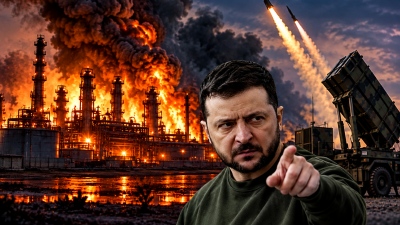
A nightmarish scenario is gaining ground regarding what we should expect in the coming weeks, if not 24 hours, on the Middle East front. A growing number of analyses argue that it is highly probable President Trump is preparing a shock strike on Iran to present it as a "last-minute victory". Building on this narrative, the US military has battle plans ready to use the "mother of all bombs"—the most powerful non-nuclear weapon in existence—against Iran's energy and nuclear facilities. Several reports even speak of an "October surprise," despite the US president himself ruling out an attack on Tehran prior to the November 3 midterm elections in the US. Despite these threatening plans, severe reservations are being voiced as to whether this bomb will prove capable of bending Iran and achieving Trump's objectives. Indeed, Iran continues to declare that it will not back down under any circumstances, warning instead that it is determined to punish the Americans and fight until they accept its demands. In this context, Tehran maintains it retains absolute control both inside and outside the Strait of Hormuz, with attacks on commercial vessels and tankers multiplying and oil flows suffering yet another heavy blow. Amid these developments, it is clear the Middle East war is heading toward an extremely dangerous escalation that could trigger a catastrophic conflict with incalculable consequences for global energy security, the international economy, and Middle East stability.
Shock plans
The US military has drawn up new attack plans incorporating the potential use of the so-called "mother of all bombs" against Iran's energy infrastructure and nuclear facilities should President Donald Trump order the resumption of military operations either before or after the midterm elections, according to multiple US officials familiar with the matter, as reported by CNN. Employing the GBU-43/B Massive Ordnance Air Blast Bomb, known as the MOAB—the largest non-nuclear weapon in the American arsenal—for the first time in the conflict with Iran would represent a major escalation.
Doubts
Nevertheless, doubts persist regarding whether it would prove effective in achieving any of Trump's stated strategic objectives or altering the war's balance, according to multiple sources familiar with internal military planning discussions regarding the weapon's potential deployment. Trump faces mounting pressure to end the deeply unpopular war as Republicans brace for potential voter backlash in upcoming midterms, while scant evidence suggests the two countries stand close to a negotiated settlement following over six months of American bombardments.
Seeking a definitive end
Although the US military continues presenting Trump with options for potential strikes against unhit Iranian targets, some officials privately question whether the White House possesses a strategy integrating these plans in a manner that could genuinely end the war—something only the president holds the authority to decide. For months, Trump and his advisers have discussed options that could be packaged as a "definitive" end to the war, at least from a public relations standpoint, keenly aware of how deeply unpopular the conflict has become among Americans. While certain administration officials have characterized the war as essentially won, Trump adopts a more restrained tone in recent statements, avoiding victory declarations and arguing that the US still has unfinished business in the country.
Trump's behind-the-scenes stance
Behind closed doors, Trump has also expressed doubts regarding external allies who urged him simply to withdraw US troops and move on. Trump has argued that such a move would project an image of defeat. Over recent weeks, White House advisers have held meetings to evaluate various options concerning Iran. Although Trump publicly announced he would initiate no new actions prior to the midterm elections, several advisers stated privately they remained uncertain whether this declaration was final or subject to change before election day.
Attack order
Trump has instructed the military to draft additional air strike plans against Iranian targets encompassing "numerous energy assets" and the potential deployment of a MOAB, one source told CNN. The same source noted the phrasing used indicated such an attack would occur "prior to the withdrawal of US forces from the CENTCOM area of responsibility." This suggests the administration could unleash supplementary strikes, attempt to declare victory, and subsequently withdraw all forces swiftly.
Targeting Mount Pickaxe
A second source informed CNN that military plans targeting Iranian nuclear facilities, including Mount Pickaxe, explicitly provide for using the MOAB. Over recent months, Trump has repeatedly threatened to strike Pickaxe, where the US and Israel believe Tehran has stored nuclear program components even after the suspension of full-scale military operations earlier this year. Trump continues emphasizing his goal is ensuring Iran never acquires a nuclear weapon.
Is the MOAB effective?
Another US official pointed out that when the military formulates operational plans, it generates a spectrum of options for policymakers ranging from the most expansive to the most constrained. Demanding targets, including those deeply buried underground, require larger bombs, and the MOAB is the largest, the official added. However, questions linger regarding whether the MOAB would serve as an effective weapon against Iran's nuclear facilities and other deeply buried targets. Although the GPS-guided bomb can obliterate an area the size of nine city blocks, it likely lacks the capability to penetrate deeply enough to destroy suspected nuclear sites at Pickaxe—believed protected by layers of granite—and other remaining Iranian nuclear facilities, sources indicated.
The MOAB weapon
Officially designated the GBU-43/B Massive Ordnance Air Blast Bomb (MOAB), it carries the moniker "mother of all bombs." It is the US's most powerful non-nuclear bomb, weighing 21,600 pounds, or roughly 9.8 tons. Developed during the Iraq War, the MOAB is a fuel-air explosive warhead detonating above ground to unleash a massive blast wave in all directions. During final testing phases in 2003, military officials told CNN the MOAB was designed primarily as a weapon for "psychological operations." Military officials noted then they hoped such a massive blast would shock Iraqi troops, pressuring them to surrender or avoid combat entirely. Under its initial design, the MOAB targeted large troop formations, military hardware, or above-ground fortified bunkers. Subsequently, its target spectrum expanded to encompass installations buried beneath softer soils, such as caves or tunnels. Trump was the first US president to deploy the MOAB during his first term, authorizing use of the military's most potent non-nuclear bomb against ISIS positions in Afghanistan in 2017.
Massive ordnance
"The MOAB is a massive weapon used primarily for perception-management operations and excels at clearing large areas, but not much more," a third source familiar with Iran military planning discussions told CNN. "It is certainly not designed as a deep-penetration warhead." If deployed, the MOAB will inflict devastating consequences on the targeted zone, but likely restricted to surface level, sources indicated. Furthermore, its massive blast radius will almost certainly trigger civilian casualty concerns, particularly if deployed near populated areas and close to non-military infrastructure.
Psychological pressure
Nevertheless, Trump might opt to utilize the MOAB as a psychological weapon at a time when the Iranian regime appears immovable and reluctant to yield to diplomatic demands. Although US officials warn its deployment is unlikely to compel Iran into submission or secure a strategic military victory, it could offer Trump an additional option to alter the conflict's current deadlock without restarting full-scale warfare. "The US president has unfortunately placed himself in a position where he is nearly compelled to act, and lacking deep-penetration munitions, must weigh psychological impacts, for which the MOAB is particularly well-suited," added the third source familiar with recent planning discussions.
Large-scale operation
Many within the administration and outside analysts agree that decisively defeating Iran would require a large-scale operation involving ground troops—a commitment potentially costing thousands of American lives. The Pentagon evaluates all scenarios, and corresponding plans consequently exist. However, no one within the administration currently advocates such a drastic move.
Ground forces
Trump has demonstrated little interest in deploying American ground forces inside Iran. Nevertheless, his desire to conclude the conflict swiftly creates a political dilemma for a president acutely aware of how unpopular the war has grown yet unable to secure a diplomatic deal ending it. Senior Trump administration officials and military brass have spent weeks focused on engineering an exit ramp offering Trump at least a "symbolic" victory to present to the American public without undermining prospects for diplomatic progress. As CNN has reported, such a development could begin with an agreement to reopen the Strait of Hormuz. A fourth source familiar with recent Pentagon military planning discussions regarding Iran told CNN that military officials drafted options amounting to a "fireworks display."
Searching for an exit
The objective would be offering Trump a way out of the conflict even if these strikes failed to achieve objectives originally invoked to launch the war. Despite Trump's recent pledge delaying additional strikes until after the midterm elections, the US military appears already preparing for potential Iranian retaliation should the president give the green light. The next rotation of US troops deployed to the CENTCOM area of responsibility is also scheduled within coming weeks, according to a fifth source, a US official acknowledging that departing personnel might not be replaced by new personnel.
All options on the table
Asked regarding the plans, a White House official told CNN the administration does not comment on sensitive military plans that may or may not exist. The official added that "President Trump keeps all options on the table to ensure Iran can never acquire a nuclear weapon." Responding to a CNN request for comment, a Pentagon spokesperson stated: "The Department of War drafts plans for a wide array of operational scenarios to execute the orders of the president and secretary and ensure mission success across any operational environment."
Trump: War with Iran will end "very soon"
US President Donald Trump reiterated his claim that the war against Iran will conclude "very soon," despite escalating attacks on commercial shipping within the Strait of Hormuz. Speaking at a campaign rally in Bullhead City, Arizona, Trump stated Washington has secured "complete control" of the strategically vital waterway and argued Iran has lost its navy, air force, radar systems, and air defenses. "First-tier leaders have been eliminated. They selected a second tier. And second-tier leaders were eliminated. They selected a third tier. Half of them have been eliminated, and they made me promise not to eliminate others. And I did. I promised them," stated Trump, hinting that attacks complicated negotiations with Tehran. "So I probably overdid it a bit. I'm sorry, because now I don't even know who the hell we're negotiating with," the US president stated. Trump acknowledged the conflict has driven fuel prices higher but predicted they will recede once hostilities cease. "I knew gasoline prices would rise, but I had no idea. To be honest with you, I thought they'd rise much higher," he stated, adding that once the war ends, prices will drop "very soon."
Ghalibaf (Iran): US must be punished for actions against Iran
Iranian Parliament Speaker Mohammad Baqer Ghalibaf stated the United States must be punished for atrocities committed against the Islamic Republic, underlining that Tehran seeks to establish "lasting deterrence." "The United States must be punished, change its behavior, and understand with absolute clarity that it must accept the legitimate demands of the Iranian nation," he stated Wednesday. The parliament speaker noted Iran's strategy foresees neither endless war nor perpetual negotiations, but the combined leverage of military power and diplomacy to compel adversaries to accept Tehran's demands. Ghalibaf stressed Iran must fight with all its might when necessary, bolster operational readiness, and translate military victories into political gains. "To achieve this, we will fight and negotiate. This means when needed, we must fight with all our strength, seize every opportunity to strengthen our readiness, and whenever we secure a battlefield victory, translate it into a political victory, consolidate it, and make it proof of enemy defeat," he stated. "On the battlefield, before God, we must believe we must fight courageously against an enemy attempting to impose its will, while simultaneously participating in negotiations to establish lasting deterrence."
The "new equation"
The Iranian official stated Tehran seeks replacing the traditional cycle of "war, negotiations, and peace" with a new equation resting on "war, negotiations, and deterrence." Ghalibaf raised the question whether a signed agreement containing American commitments could prevent the United States from attacking Iran again. "Undoubtedly no," he replied. He characterized US hostility toward Iran as deeply rooted, arguing Washington's hegemonic and coercive tendencies fuel its ambitions. "Undoubtedly, as the martyred Leader [of the Islamic Revolution, Ayatollah Seyyed Ali Khamenei] stated, they have come to devour Iran," he noted. Ghalibaf recalled Iran structured the memorandum of understanding signed with the US in June in two stages because it mistrusted Washington regarding honoring commitments. Concurrently, he argued achieving strategic supremacy by the Islamic Republic on the battlefield compelled Washington to accept the agreement. He added that achieving this understanding also generated opportunities and secured resources strengthening Iranian Armed Forces and the Hezbollah resistance movement in Lebanon. The Iranian official also lauded improvements in Iran's firepower, offensive capabilities, and air defense during the interval between recent rounds of unprovoked US and Israeli attacks against the Islamic Republic. "From [damage inflicted on American] drones to [material losses suffered by American] F-35s, you saw what results all this produced," he stated.
Iran: We fully control the Strait of Hormuz
Iran has deployed new naval units boosting surveillance over the Strait of Hormuz as attacks against commercial vessels reached their highest level since the US-Israel war began in February. According to Iranian state media, the navy announced deploying new units enabling "real-time surveillance of hostile activities and maritime traffic" in the Strait of Hormuz, the Gulf of Oman, and the Arabian Sea. According to maritime tracking firm Kpler, ten tankers suffered attacks in the Strait of Hormuz between September 28 and October 4, followed by an additional strike on October 5. The British United Kingdom Maritime Trade Operations (UKMTO) center independently logged 15 other attacks between October 6 and October 14, with 11 occurring over the past four days alone. The escalation sparked severe disruptions in oil shipments traversing this strategically vital maritime route. Kpler data showed only 2.9 million barrels of oil traversed the Strait of Hormuz on October 11, down from nearly 20.8 million barrels on October 8. Iran maintains restrictions it imposed constitute a response to US-Israeli attacks and Washington's blockade of Iranian ports. For its part, CENTCOM insists US forces and regional partners control the strait. These conflicting claims highlight ongoing confrontation over control of the strategic waterway, through which roughly one-fifth of global crude oil and liquefied natural gas (LNG) supplies flowed prior to the war.
Iran prepares for full-scale war
Israeli sources argue Iran prepares for a full-scale war. According to Israeli network i24NEWS, Iranian officials remain convinced the United States will launch a fresh attack against the country. The network also reported a war footing prevailing in Tehran. Al Mayadeen network, citing high-ranking Iranian officials, reported they consider a new US-Israeli military operation against Iran entirely certain.
Bloomberg: Israel plans strikes on Iran oil and gas facilities
According to a claim broadcast by Bloomberg citing a US military official, Israel seeks launching a large-scale attack against Iran encompassing oil and natural gas facilities. Halevi, IDF Chief of Staff, stated the military reached the highest combat readiness level for executing any offensive or defensive action. According to claims by Israeli sources, Iran processes preparations for full-scale war. CENTCOM claimed conducting a strike against an Iranian pleasure craft.
www.bankingnews.gr








Σχόλια αναγνωστών